
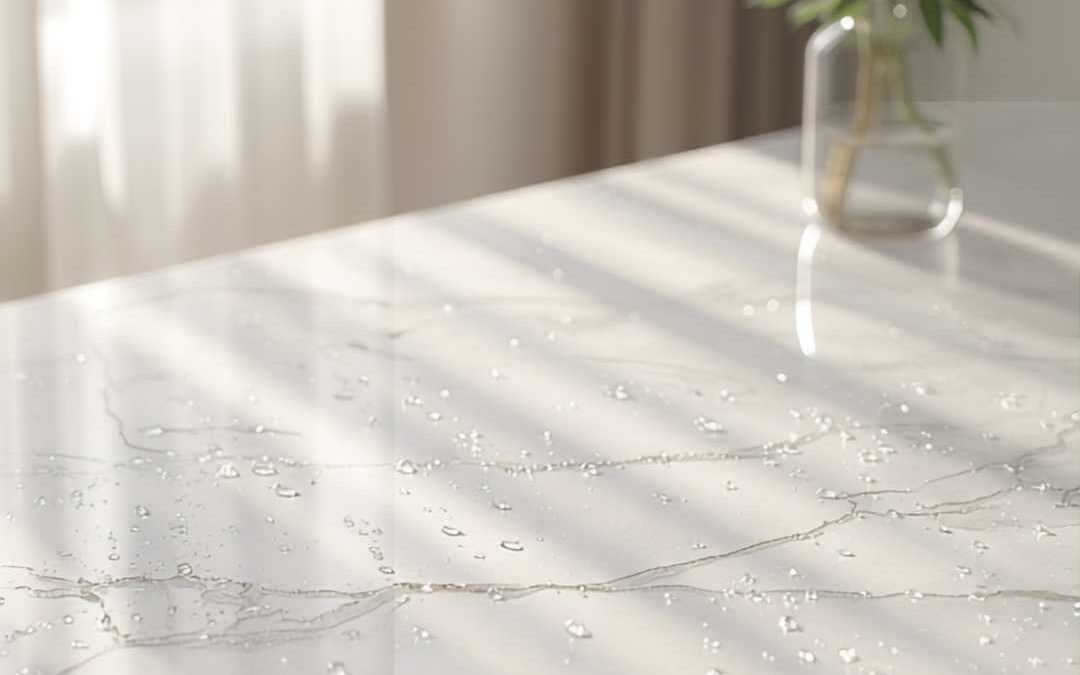
Part 1:
Marble, Humidity & Moisture in Georgia: What Every Homeowner Should Know
Marble has been used in Southern homes for generations. From historic homes in Savannah to custom homes in Buckhead and lake houses at Lake Oconee, natural stone brings beauty that few other materials can match.
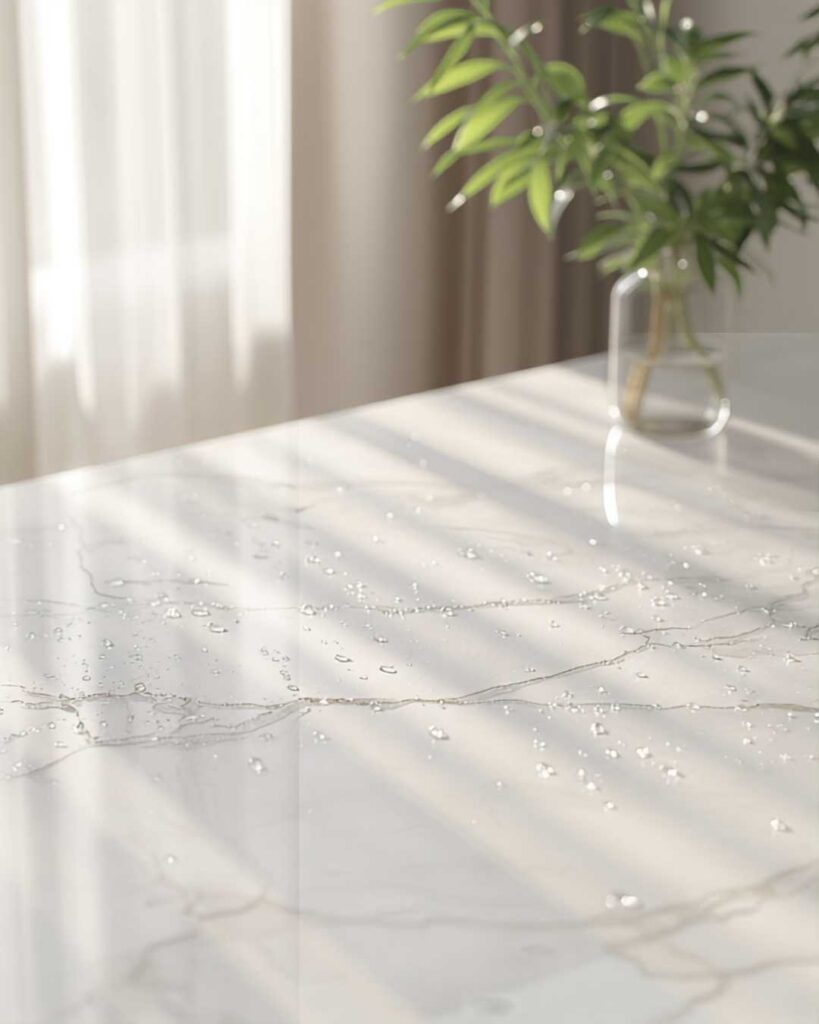 But living in Georgia means living with humidity.
Long summers, afternoon thunderstorms, high moisture levels, and plenty of pollen all create conditions that are very different from drier parts of the country. That doesn’t mean marble is a bad choice. It simply means your stone needs the right care.
The good news is that most moisture problems are preventable. And when they do happen, they can often be corrected before permanent damage occurs.
Whether you live in Metro Atlanta, North Georgia, Augusta, Macon, Savannah, or anywhere else across the Southeast, understanding how moisture affects marble will help protect your investment for years to come.
Does Georgia’s Humidity Damage Marble?
This is one of the questions we hear most often.
The answer is no—not by itself.
Normal humidity in the air doesn’t usually hurt properly installed marble.
What causes problems is water that stays where it shouldn’t.
That water might come from:
- A leaking faucet or drain
- Failed caulk around a sink or shower
- Cracked grout
- Poor shower waterproofing
- Water working its way beneath a floor
- Standing water on outdoor patios
- Condensation that never dries
- Poor ventilation in bathrooms
Georgia’s climate simply makes these problems worse because damp areas take longer to dry.
If moisture keeps finding its way into the stone or beneath it, eventually you’ll begin to notice changes in how your marble looks.
🛡️ N-Motion Atlanta Stone & Tile Restoration specializes in marble refinishing, grout replacement and sealing solutions
Why Does Marble Turn Dark?
One of the first signs of a moisture problem is darkening.
Marble naturally absorbs some moisture. After a shower or a spilled glass of water, it’s normal for the stone to darken slightly before drying back to its original color.
But when part of your marble stays dark for several days—or never seems to lighten—that’s usually telling you something.
The source could be:
- Water trapped beneath a shower floor
- A leaking drain
- Failed caulk around a vanity
- Water entering through grout joints
- A plumbing leak inside the wall
- Moisture trapped beneath the installation
The marble isn’t necessarily the problem.
It’s simply showing you that water is moving somewhere it shouldn’t.
One mistake homeowners sometimes make is applying more sealer, hoping it will solve the issue.
Unfortunately, sealers don’t repair leaks.
In some situations, sealing over wet stone can actually make it harder for trapped moisture to escape.
Before any sealer is applied, it’s important to understand why the marble is staying dark in the first place.
Why Humidity Matters More in the South
Homes throughout Georgia face challenges that homeowners in Arizona or Colorado rarely think about.
Our climate means:
- Bathrooms stay damp longer.
- Outdoor stone gets frequent rain.
- Pool decks remain wet for hours after a storm.
- Shower walls dry more slowly.
- Crawl spaces and basements often have higher moisture levels.
During the summer, warm, humid air makes it much harder for moisture to leave stone surfaces.
That’s why proper ventilation is just as important as polishing or sealing marble.
A bathroom exhaust fan may not seem like part of stone maintenance, but it can make a huge difference over time.
What Is That White Powder on My Marble?
If you’ve ever noticed a white, chalky powder appearing on marble, grout, or nearby stone, you’re probably seeing efflorescence.
It looks alarming, but it doesn’t usually mean the marble is failing.
Instead, it’s a sign that water is moving through the installation.
Here’s what happens.
Water travels through mortar, concrete, or grout beneath the stone. As it moves, it dissolves naturally occurring mineral salts. When that water reaches the surface and evaporates, the minerals stay behind as a white powder.
Cleaning the powder removes the symptom.
It doesn’t remove the cause.
If the white powder keeps coming back, moisture is still moving through the installation somewhere.
That’s the issue that needs attention.
Don’t Ignore Moisture Around Sink Caulk
We restore a lot of marble bathroom vanities throughout Georgia.
One of the most common problems isn’t the marble itself.
It’s failing caulk.
Caulk around sink rims, backsplashes, and faucet penetrations keeps water from slipping beneath the stone.
Over time it shrinks, cracks, or pulls away.
Once that happens, every splash of water has a path underneath the countertop.
Homeowners often notice:
- Dark staining around the sink
- Mildew returning again and again
- Loose caulk
- Water collecting beneath the sink rim
- Discoloration around the backsplash
Many people think the countertop needs replacing.
Usually it doesn’t.
Professional restoration often includes removing all the old caulk, installing fresh color-matched caulk, restoring the marble finish, and applying the appropriate protection.
Can Mold Grow on Marble?
Not exactly.
Mold doesn’t feed on marble.
It feeds on the soap residue, body oils, shampoo, dust, and organic material sitting on top of the marble.
That’s why mildew usually shows up:
- Along shower corners
- Around sink rims
- Behind soap bottles
- Around tubs
- In cracked caulk
- On damp grout
Cleaning mildew is important.
But if it keeps returning, the problem usually isn’t the cleaner.
It’s the moisture.
Until that moisture is controlled, mildew will continue finding places to grow.
Marble Showers Need Time to Dry
Marble showers are beautiful.
They’re also exposed to more water than almost any other surface in your home.
A properly built shower is designed to move water toward the drain while protecting everything underneath the marble.
Homeowners can help by creating conditions that allow the shower to dry between uses.
Simple habits make a difference:
- Run the exhaust fan during and after every shower.
- Leave the shower door open when possible.
- Use a squeegee to remove standing water.
- Repair cracked grout quickly.
- Replace failing caulk before water gets behind it.
- Clean with products made specifically for natural stone.
One thing you should never use is vinegar.
It may be a popular household cleaner, but vinegar is acidic.
Acid attacks marble and can leave permanent dull spots that only professional restoration can remove.
