
Natural stone adds beauty and value to a home. But granite, marble, quartzite, limestone and travertine can all show signs of wear.
Spills may leave stains. Acidic foods can dull marble. Heavy pots can chip an edge. Water may leave a white crust around the sink.
The good news is that many of these problems can be fixed. You may not need to replace your countertop.
If you are nearby, N-MOTION Atlanta Stone & Tile Restoration cleans, repairs, restores and protects natural stone in Metro Atlanta and nearby Georgia areas. Our Certified Stone Protection Experts can help you choose from several protection options based on your stone, space and daily needs.
Here are some of the questions we hear most often.
Why does my countertop look dull or cloudy?
 Dull stone may be caused by daily wear, cleaner buildup, hard-water deposits or damage to the finish.
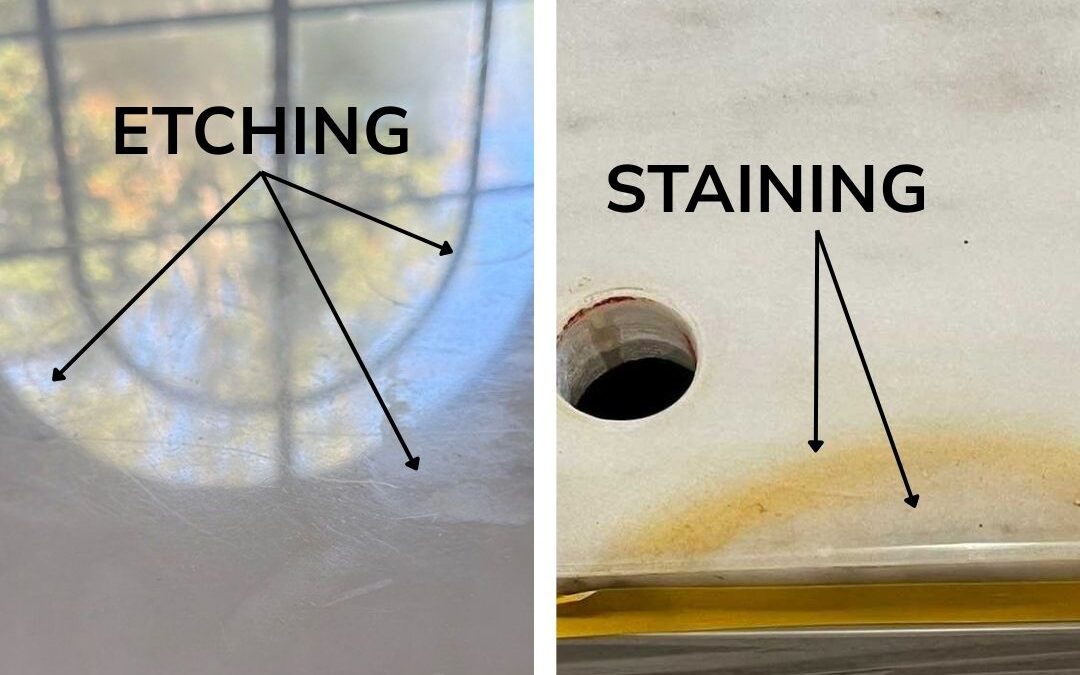
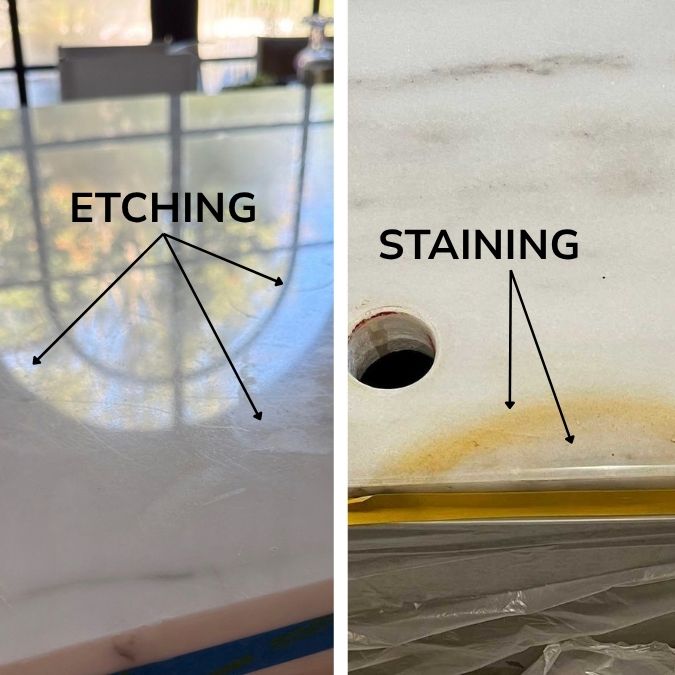
On marble and limestone, pale or cloudy spots may be etch marks. Etching happens when acid reacts with the stone. It cannot be wiped away with a regular cleaner.
Store-bought polish is not always the answer. Some products leave a waxy film that makes the stone look worse.
How to help prevent dull stone:
- Use a pH-neutral cleaner made for natural stone.
- Do not use vinegar, bleach or rough cleaning powders.
- Use cutting boards, coasters and hot pads.
- Wipe up spills right away.
How N-MOTION can help:
We first find out why the stone looks dull. We can then deep clean, hone or polish it to bring back an even finish.
What are the white rings on my countertop from?
A pale ring under a glass is often an etch mark—not a stain.
Marble, limestone and travertine contain minerals that react with acid. Common causes include: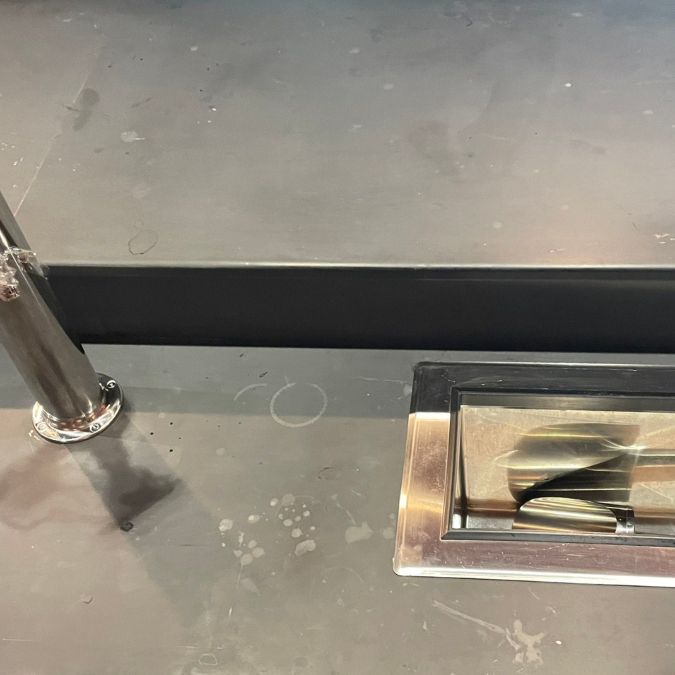
- Lemon or lime juice
- Wine
- Soda
- Tomato sauce
- Vinegar
- Some bathroom and kitchen cleaners
Etching changes the surface of the stone. Cleaning alone will not remove it.
How to help prevent etching:
- Use coasters and placemats.
- Clean spills as soon as they happen.
- Keep acidic cleaners away from natural stone.
- Use care around bars, coffee stations and kitchen islands.
How N-MOTION can help:
Our team can hone and polish the damaged area. We work to blend it with the rest of the countertop, so the finish looks smooth and even again.
We also offer added protection for high-use marble. Our team can explain the options and help you decide if a professional anti-etch film or coating is a good fit.
Why does my countertop have a dark stain?
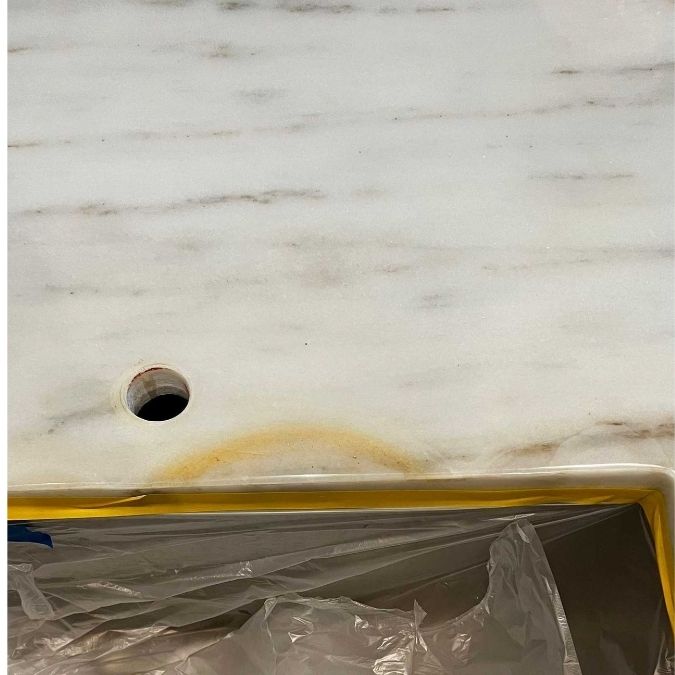
Natural stone has tiny pores. Oil, coffee, wine, makeup and food coloring may soak into those pores and leave a dark mark.
Do not pour random cleaners on the stain. The wrong product may spread it, set it or harm the stone.
 How to help prevent stains:
- Blot spills instead of wiping them across the counter.
- Clean up oil, coffee and wine quickly.
- Keep makeup and skin care products on a tray.
- Have the stone checked to see if it needs sealing.
Sealer gives you more time to clean a spill. It does not make the stone stain-proof.
How N-MOTION can help:
We look at the color, shape and location of the stain to find its likely cause. We may use a stone-safe treatment or poultice to draw it out. After that, we can suggest the best protection for the stone – some of our stone protection options are guaranteed to prevent stains.
What is the white crust around my sink?
The white or chalky crust near a faucet is often mineral buildup. Water dries, but the minerals stay behind. Soap can mix with the minerals and make the buildup even harder to remove.
Do not use vinegar on natural stone. It may break down the buildup, but it can also damage marble, limestone and travertine.
How to help prevent mineral buildup:
- Dry the area around the sink each day.
- Fix dripping faucets.
- Do not let soap and water sit around the fixtures.
- Use a cleaner made for natural stone.
How N-MOTION can help:
We can remove the buildup with stone-safe tools and products. If the deposits have damaged the finish, we can restore that area too.
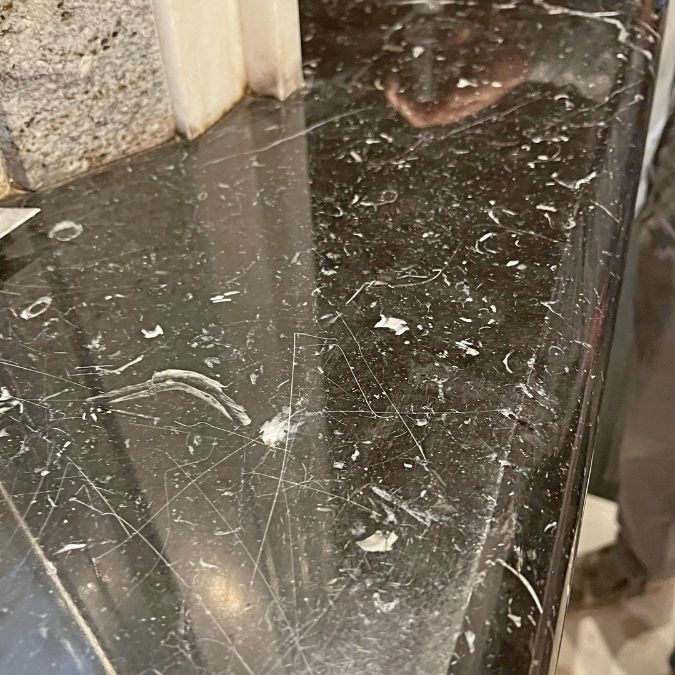
Can scratches be removed?
Most scratches can be removed by a professional stone restoration service like N-MOTION.
Scratches often come from sliding small appliances, pots, dishes or rough pottery across the counter.
 How to help prevent scratches:
- Use a cutting board.
- Lift appliances instead of dragging them.
- Put felt pads under countertop décor.
- Wipe away crumbs and grit before cleaning.
- Avoid rough scrub pads.
How N-MOTION can help:
We check how deep the scratches are and choose the right repair process. We may hone and polish the stone to make the finish even again.
Can a chipped edge be repaired?
In many cases, yes.
Chips often happen near sinks, dishwashers, cooktops and kitchen islands. One hit from a heavy pot can knock out a small piece of stone.
How to help prevent chips:
- Be careful with heavy pans and cast-iron cookware.
- Lift items instead of sliding them over an edge.
- Do not sit or stand on a countertop.
- Take care around sink and cooktop openings.
How N-MOTION can help repair chips in Georgia:
We can often repair chips with professional fillers. We select a color that works with the stone and shape the repair to match the edge.
Is that line a crack, seam or natural vein?
Not every line in a countertop is damage.
It may be:
- A natural vein
- A small fissure formed in the stone
- A seam between two slabs
- A crack caused by stress or impact
A new line should be checked if it is growing, moving or no longer feels flat.
What should you do?
- Keep heavy items away from the area.
- Do not fill the line with household glue.
- Take a photo so you can track any change.
- Ask a stone expert to inspect it.
How N-MOTION can help:
We can tell you what type of line you are seeing. If it is a crack or failed seam, we can explain the best repair. We can also tell you if the cabinets or countertop support should be checked.
Why does my countertop seam look dirty or uneven?
Seams may collect grease and dirt over time. The old filler may also crack, shrink or come loose.
If one slab sits higher than the other, the cabinets or countertop may have moved.
How to help prevent seam problems:
- Keep seams clean and dry.
- Do not pick at the seam filler.
- Avoid placing very heavy items over a seam.
- Have loose or uneven seams checked early.
How N-MOTION can help:
We can clean and repair many seams. If movement caused the damage, we will point that out before making a surface repair.
Why is the caulk around my sink cracking?
Caulk does not last forever. Water, age and small shifts in the countertop can cause it to crack or pull away.
Broken caulk lets water and dirt enter the gap. Over time, this may harm the cabinets, backsplash or nearby materials.
How N-MOTION can help:
We can remove the old caulk, clean the joint and apply new material for a neat finish and better water protection.
What are the best ways to protect marble?
There is no single protection plan that works for every marble surface. A kitchen island, bathroom vanity, dining table and outdoor feature may each need a different plan.
N-MOTION offers a range of protection options. Our Certified Stone Protection Experts can check the stone, explain the choices and help you choose the best fit for your property.
1. Apply a penetrating sealer
A penetrating sealer soaks into the stone. It helps slow the absorption of water, oil and other liquids. This gives you more time to clean up a spill.
A sealer helps fight stains, but it does not stop acid etching.
Marble may need to be sealed again every one to three years. The timing depends on the type of marble, the product and how often the surface is used. If water no longer beads on the surface, it may be time for an inspection.
2. Keep acids away from marble
Lemon, vinegar, wine, tomatoes and many bathroom cleaners can etch marble. Even a sealed surface can still be etched though there are stone protection option we can recommend to prevent etching and staining.
Wipe spills up right away. Use only pH-neutral cleaners made for natural stone.
3. Use simple barriers
Everyday items can prevent a lot of damage:
- Coasters
- Trivets
- Placemats
- Trays
- Cutting boards
- Bath mats
- Felt pads
These barriers help protect against stains, heat, scratches and daily wear.
4. Clean the stone gently
Use a soft cloth or mop. Avoid rough pads, cleaning powders, bleach and vinegar-based products.
More scrubbing does not always mean a better clean. On marble, hard scrubbing may damage the finish.
5. Add stronger protection in high-use areas
Busy countertops and tables may need more than sealer. A professional anti-etch film or coating can offer stronger protection against acid, stains and wear.
This type of protection may change how the surface looks or feels. It also has its own care needs. Our team can show you the available options and explain the benefits, limits and upkeep before you decide.
6. Maintain the finish
Small scratches and etch marks can build up over time. Professional countertop honing and polishing can remove or reduce this damage and bring back an even finish.
Outdoor marble may also need protection from standing water and freeze-and-thaw damage during cold Georgia weather.
The key difference
This is the point every marble owner should know:
Sealers mainly protect against stains. They do not stop acid etching.
Stone coating and physical barriers offer more protection against etching and wear.
Our team can help you compare these choices based on the stone, its location, its current finish and the amount of use it gets.
Can I use regular household cleaners?
Many common cleaners are too harsh for natural stone. They may contain acid, bleach, rough particles or strong grease cutters.
These products can dull the finish, damage marble or weaken the stone’s protection.
Use a pH-neutral cleaner marked safe for natural stone. If you are not sure, ask a stone care expert before using it.
Can my old countertops look good again?
Very often, yes.
Professional stone restoration may improve:
- Dull or cloudy areas
- Etch marks
- Stains
- Scratches
- Mineral buildup
- Chips
- Cracks
- Damaged seams
- Old caulk
Restoring the stone may cost less and create less mess than replacing the whole countertop.
Get Help From Atlanta Stone Care Experts
Stone is strong, but it still needs the right care. A cleaner that works on one surface may damage another. A stain needs a different treatment than an etch mark. Sealer also gives a different type of protection than a coating.
That is why the first step is finding out what the stone needs.
The Certified Stone Protection Experts at N-MOTION Atlanta Stone & Tile Restoration can:
- Find the cause of the damage
- Treat many stains and etch marks
- Hone and polish dull stone
- Repair many chips, cracks and seams
- Remove hard-water and soap buildup
- Replace worn caulk
- Apply penetrating sealers
- Install anti-etch protection
- Explain the benefits and limits of each option
- Build a care plan for your property
Before you replace a stained, scratched or dull countertop, find out if it can be restored and protected.
Contact N-MOTION Atlanta Stone & Tile Restoration to schedule a stone assessment in Metro Atlanta or a nearby Georgia area. We will help you choose the right repair and protection plan for your home or property.
Results depend on the type of stone and the cause and depth of the damage. An in-person visit is the best way to choose the right treatment.
